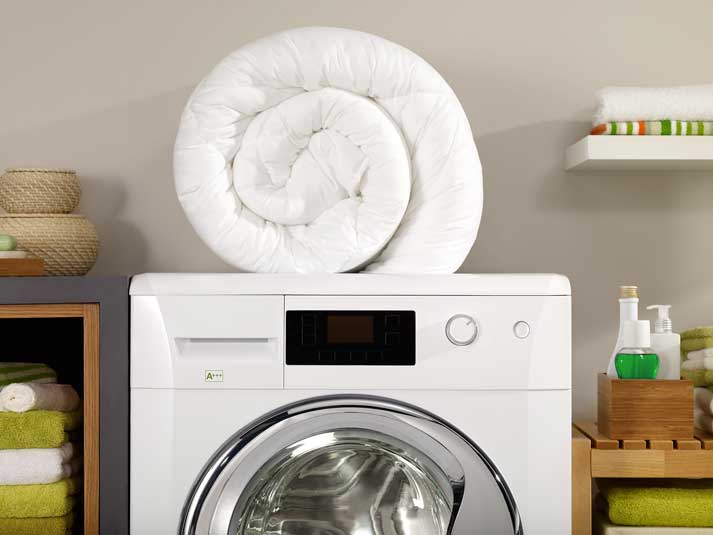

You likely bought your down comforter or winter jacket for one reason: the loft. That cloud-like volume isn’t just about luxury; it’s what traps heat and keeps you warm.
The problem is that loft is fragile. The moment you introduce water, soap, and heat—the three ingredients of cleaning—you are risking the very thing that makes the garment valuable. If done incorrectly, down doesn’t just get “flat”; it can clump permanently, develop a sour odor, or lose its insulating properties entirely.
Because of these risks, Janet Davis is not the right choice for every item. If your down piece has significant tears or structural failure in the fabric, cleaning it may actually accelerate the damage by forcing feathers out of the holes during the agitation cycle. In those cases, a seamstress or tailor should be your first stop.
However, if you have a high-quality down piece that requires seasonal maintenance or professional restoration, here is how to handle it safely.
How Often Should You Clean Your Down?
Most people assume that a professional cleaner can simply “wash” down without risk. In reality, danger exists in both the cleaning and drying phases—from how the dyes react to specific agents to how the feathers are dried.
Down feathers are organic materials. When they get wet, they compress. To regain their loft, they need to be “beaten” back into place by a constant flow of air in a space large enough for them to tumble freely.
When people attempt this at home or use budget cleaning services, several common failures occur:
1. The Volume Trap
A down comforter may fit into a home washing machine, but it rarely has enough room in a home dryer. If the item is too cramped, air cannot reach the center of the fill. This leaves the core damp, which leads to “clumping” and, eventually, a sour or moldy smell that is incredibly difficult to remove.
2. The Heat Trade-Off
Because home dryers take so long to dry down, many people turn up the heat to speed things up. High heat is catastrophic for modern down jackets; it can melt synthetic outer shells, warp zippers, and damage care tags.
3. Color Bleed and Intensity Loss
Down outerwear often features deep pigments—specifically deep reds and blacks. If the dye was not set properly during manufacturing, certain cleaning agents or temperatures can cause the color to bleed or lose its intensity. A specialist must balance the need for a thorough clean with the need to preserve the garment’s original hue.
4. The “Leaking” Effect
If there is even a pinhole in the stitching of your comforter or jacket, the agitation of a machine can force feathers out of the fabric. This doesn’t just ruin the look of your garment—it can clog the machinery and leave you with permanent flat spots where the insulation has escaped.
How Janet Davis Safely Restores Down
We approach down care as a balance between aggressive cleaning and absolute safety. We don’t use a one-size-fits-all cycle; we match the process to the specific garment.
The Cleaning Phase
Depending on the item and its care label, we utilize different wet-cleaning cycles. These are programmable sequences that control temperature, cleaning agents, and timing with precision.
While traditional wisdom in the trade once suggested you should never dry clean down, modern solvents and computer-controlled machinery have changed the math. For items where water is too risky or labels prohibit washing, we can now selectively dry clean down to maintain its integrity without compromising the feathers.
The Drying Phase
This is where the restoration actually happens. We use large-capacity commercial dryers that provide the necessary room for a comforter or coat to tumble and expand.
To ensure maximum “fluff,” we utilize wool balls during the drying cycle. While some use tennis balls, wool is superior—it acts as a natural fabric softener, reduces static, and more effectively breaks up clumps to restore the original loft of the feathers. Crucially, this process isn’t just about heat; it’s about movement. Even if an item has fully dried but remains clumped, running it through a high-volume dryer on no heat for an extended period can often “shake” the down back into its proper distribution and restore that original volume.
The “Rescue” Mission: Can Clumped Down Be Fixed?
We frequently see items that have been “processed” at home but never truly dried or fluffed.
One recent client brought us a comforter that had been washed in a machine but stayed damp in the center because the dryer was too small. By the time it reached us, the down had begun to mold and smelled awful. Because we can perform a deep-cleaning cycle followed by a full, high-volume dry, we were able to strip out the odor and restore the loft.
Similarly, we often treat “yellowed” comforters—items that haven’t been cleaned in years and have accumulated natural body oils and residue. An extended deep-clean removes these organic stains and restores the original brightness of the fabric without stripping the feathers.
How to Judge a Down Cleaning Service
If you are deciding where to take a high-end down jacket (like a Canada Goose) or a luxury comforter, ask these three questions:
- “Do you have dryers large enough for this specific item to tumble freely?” If they hesitate, your item will likely come back clumped.
- “What do you use to break up the clumps during drying?” Look for an answer that involves mechanical action or movement—such as wool balls—rather than just “high heat.” A long dry with low heat is always superior to a short dry with high heat.
- “Can you handle items with specific care labels that prohibit water?” A specialist should be able to discuss modern dry-cleaning solvents as an alternative to wet cleaning.
The Fifth Generation Standard
Since 1938, our family has watched the evolution of garment technology—from heavy wools to high-tech synthetic down shells and luxury bedding. That experience is why we invest in programmable commercial equipment; it removes the guesswork and replaces it with a repeatable, safe standard for every item that enters our care. We don’t just “wash” your belongings; we steward an investment in your home’s comfort and your winter wardrobe.
Next Steps for Your Down Care
If you have a winter coat or household textile that needs professional attention:
- For luxury down jackets and outerwear, visit our Luxury Down Winter Coats page.
- For comforters, duvets, and other bedding, explore our Household Services page.
Questions We Hear Often
Can you fix a down comforter that has already clumped?
Yes. Clumping is often the result of improper drying or lack of agitation. By using professional-grade dryers with sufficient volume and wool balls—sometimes even on no-heat cycles for extended periods—we can usually break up those clumps and restore the loft.
Do you have experience cleaning high-end brands like Canada Goose?
Yes. We regularly handle luxury down-filled jackets. Because these items often have complex outer shells and specific trim, we recommend bringing them in for a physical assessment so we can provide an accurate quote and timeline.
Why does my down comforter smell “sour” after I wash it at home?
This happens when the interior of the comforter remains damp long after the outside feels dry. This trapped moisture allows bacteria to grow within the feathers. A professional deep clean and a thorough, high-volume dry are required to eliminate the odor.
Can you repair tears where down is leaking out?
We assess every item at intake. We can perform minor repairs in-house or refer you to a specialist if the damage requires extensive structural work to prevent further feather loss during the cleaning process.
How much does it cost to clean a down comforter or jacket?
To ensure our pricing remains current, we provide quotes upon assessment rather than listing them here. Generally, our down comforters follow a standard price regardless of size or brand, while costs for down coats vary by size and complexity. Please visit our pricing page for more information.
Photo Credit: gerenme